
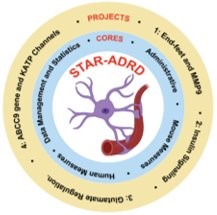
STAR-AD/ADRD
Strategies for Targeting Astrocyte Reactivity in AD and ADRDS
P01 NIH/NIA, Overall PI: Norris
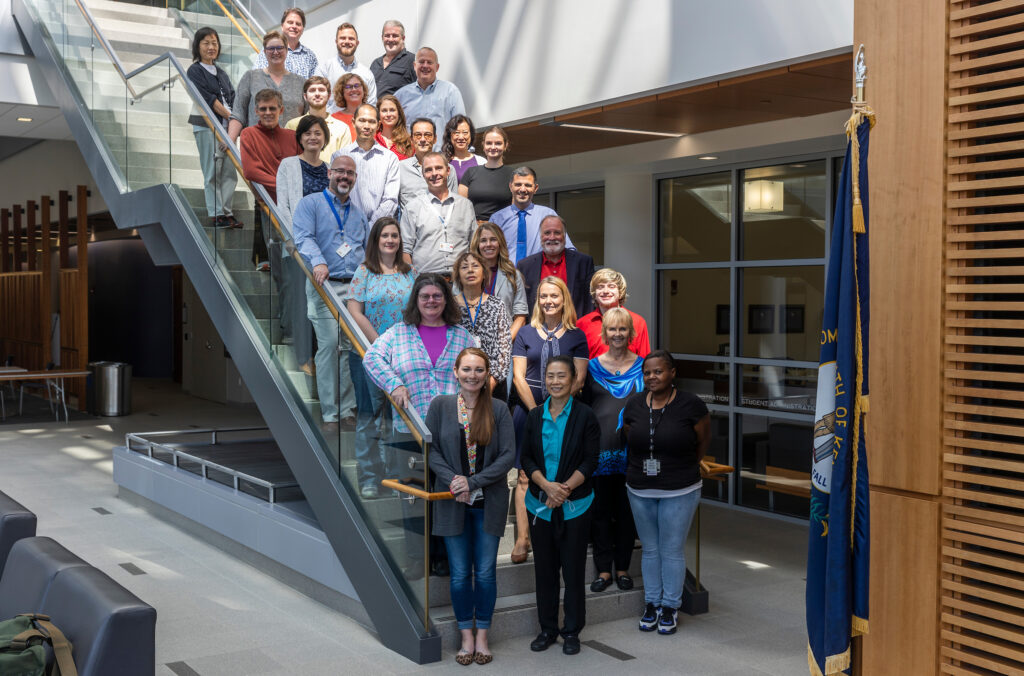
STAR-AD/ADRD is a multilab P01 project that investigates the impact of several interrelated astrocyte signaling pathways on pathophysiology related to dementia. There are four key aspects of the P01: (1) Selective targeting of astrocytes and astrocyte signaling in intact animal models; (2) Focus on brain function using powerful tools including Two-photon imaging, microelectrode array-based neurochemistry, and electrophysiology; (3) Investigation of mixed/multi-etiology, which is a major area of strength at the Sanders-Brown Center on Aging; and (4) Integration with human data provided by the world-class brain and biofluids bank at the SBCoA/UK-ADRC.
Source of Support: P01AG078116. September 2022-August 2027
The four projects in the P01 will test the overall hypothesis that reactive astrocyte signaling drives cerebrovascular dysregulation, hypometabolism, and impaired neural network activity in AD and ADRDs.
- Project 1 is led by Dr. Donna Wilcock and investigates astrocyte endfeet in small cerebrovessel disease.
- Project 2 is led by Dr. Olivier Thibault and investigates astrocytic insulin signaling in AD.
- Project 3 is led by Dr. Chris Norris and investigates astrocytic glutamate transport in a mixed model of AD and small cerebral vessel disease.
- Project 4 is led by Dr. Pete Nelson and investigates astrocytic K-ATP channels in limbic-predominant age-related tdp-43 encephalopathy (LATE) +/- hippocampal sclerosis.
Projects are supported and integrated by four Core components:
The Administrative Core is led by Dr. Chris Norris and provides overall organization, molecular reagent/transgenic mouse quality control, as well as budgetary oversight
The Animal Vascular-Metabolic-Neural Network Core is directed by Dr. Bob Sompol and provides physical resources and expertise in numerous physiologic measures including two photon imaging, multi-electrode array-based neurochemistry, electrophysiology, and MRI/MRS.
The Human Consultation-Biosamples-Biomarkers Core is led by Dr. Pete Nelson and Dr. Yang Jiang and provides postmortem human source material as well as biofluids and imaging data from living humans. It also assists with human sample study design and integration with mouse studies.
The Data Management and Biostatistics Core is led by Dr. Yuriko Katsumata and provides a secure central database and individually tailored and integrated statistical analyses.
Key Publications
2023 – Reactive astrocyte signaling disrupts neurovascular coupling and synaptic function in a mouse model of VCID. Astrocytic Ca2+ dysregulation in conjunction with elevated CN/NFAT activity is shown in a diet-based model of small cerebrovessel disease. Direct inhibition of astrocytic CN/NFAT activity protects neurovascular coupling, synaptic function, and cognitive status in these mice.
Calcineurin (CN) and Immune/Inflammatory Processes in Alzheimer’s Disease
RF1 NIH/NIA (ongoing from 2006) PI: Norris
Source of Support:. RF1-AG027297 September 2006-April 2023
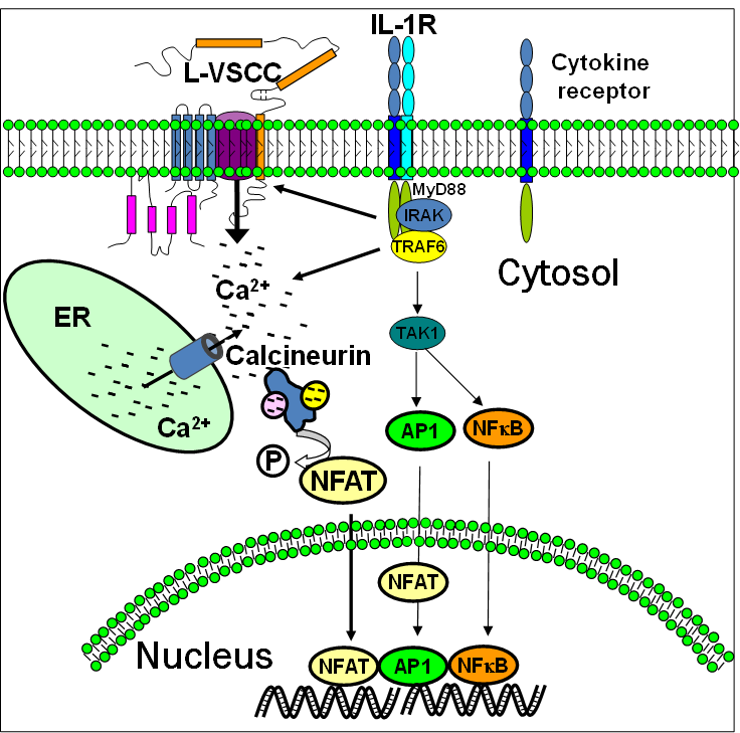
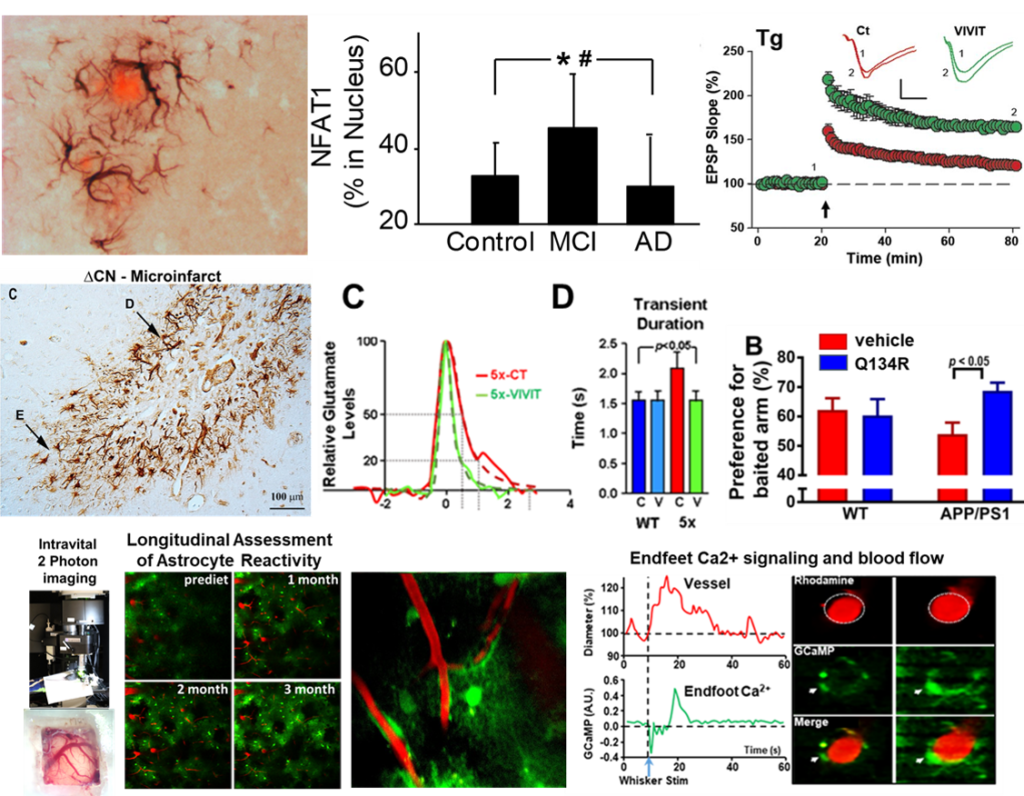
This is an R01 project that has been funded since 2006. The protein phosphatase calcineurin (CN) and it’s role(s) in astrocyte reactivity related to Alzheimer’s disease (AD) is the primary focus. We discovered that CN— an enzyme that is abundant in neurons and linked to synaptic function and plasticity— is also enriched in reactive astrocytes where it regulates reactive phenotypes through interactions with the transcription factor NFAT. We’ve shown that CN/NFAT signaling is hyperactivated in human brain tissue at early stages of dementia around amyloid deposits and also in conjunction with cerebrovascular pathology.
Moreover, selective inhibition of CN/NFAT signaling in intact mouse models ameliorates key phenotypes associated with AD/ADRDs including: cognitive decline, synapse dysfunction, neuronal hyperexcitability, glutamate dysregulation, and impaired neurovascular coupling. Altogether, the results demonstrate that astrocyte signaling (in general) and hyperactive CN/NFAT activity (in particular) are key contributors to AD/ADRD pathophysiology and represent promising drug targets for reducing and/or preventing dementia.
Key Milestones
2005 – Increased expression of CN in reactive astrocytes with mechanistic links to reactive astrocyte transcriptional phenotypes. Intense CN immunostaining found around amyloid deposits in APP/PS1 mice. Expression of activated CN in mixed neural cultures (astrocytes and neurons) causes reactive morphologic changes in astrocytes and recapitulates transcriptional signatures associated with astrocyte reactivity, age-related memory deficits, and early-stage AD.
2008 – Hyperactive CN/NFAT activity in astrocytes is triggered by microglia-derived factors and underlies neurotoxic interactions between astrocytes and neurons. CN/NFAT activity in primary astrocytes is triggered by inflammatory cytokines. CN/NFAT underlies maintained immune/inflammatory signaling and leads to diminished neuronal viability via the downregulation of astrocytic glutamate transporters.
2009-2011 – CN is proteolized to a hyperactive fragment at early stages of cognitive loss. First evidence that CN proteolysis and elevated NFAT activity are found in the hippocampus at very early stages of AD-associated cognitive decline in humans.
- Abdul HM et al (2009) The Journal of Neuroscience 29:12957–12969
- Mohmmad Abdul H et al (2011) Aging Cell, 10:103-113
2012 – Targeting reactive astrocyte signaling alleviates deficits in neural function in intact AD mouse models. Direct inhibition of CN/NFAT signaling in astrocytes of intact APP/PS1 mice reduces glial reactivity and amyloid pathology and improves synaptic and cognitive function. One of very first demonstrations that suppression of reactive astrocyte signaling leads to improved neural function in an animal model of AD.
2016 – CN proteolytic fragments are found in reactive astrocytes around microinfarcts in human brain and also appear following brain injury in rats where they contribute to synapse dysfunction . Evidence for hyperactive CN/NFAT signaling associated with small cerebrovessel disease in humans and traumatic brain injury in rats.
- Furman JL, Sompol P et al (2016) The Journal of Neuroscience, 36: 1502 –155
- Pleiss MM et al (2016) Biochimica et Biophysica Acta, 1862: 1521-1532
2017 – CN/NFAT activity in reactive astrocytes drives glutamate dysregulation in an AD mouse model. Direct inhibition of CN/NFAT signaling in astrocytes reduces glutamate transient frequency and clearance, quells neuronal hyperexcitability, and restores the functional balance between NMDARs and AMPARs in 5xFAD mice.
2021 – Novel small chemical NFAT inhibitor improves neural function in an AD mouse model. The novel chemical compound Q134R exhibits NFAT inhibitory properties in astrocytes and promotes survival in aging WT mice. Q134R also ameliorated synaptic and cognitive deficits in APP/PS1 mice.
2023 – Reactive astrocyte signaling disrupts neurovascular coupling and synaptic function in a mouse model of VCID. Astrocytic Ca2+ dysregulation in conjunction with elevated CN/NFAT activity is shown in a diet-based model of small cerebrovessel disease. Direct inhibition of astrocytic CN/NFAT activity protects neurovascular coupling, synaptic function, and cognitive status in these mice.
Preclinical Evaluation of Commercial Calcineurin Inhibitors and Novel NFAT Inhibitors in AD and ADRDs
RF1- NIH/NIA – Co-PIs: Head/Norris

Elizabeth Head, M.A., Ph.D.
Professor, Vice Chair for Research
Department of Pathology and Laboratory Medicine
Director, Experimental Pathology ProgramUniversity of California, Irvine | Website
Source of Support:. RF1AG056998 September 2017-April 2027
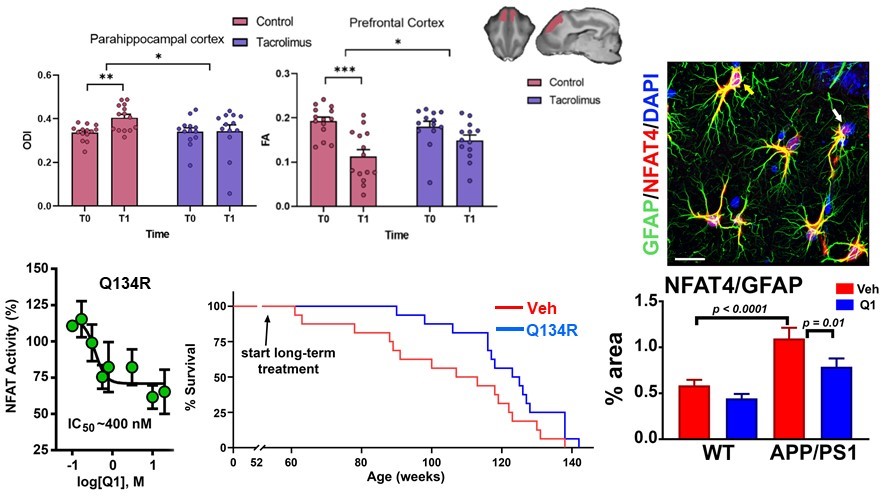
This is an R01 project funded since 2017 that provides a preclinical investigation of a commercial calcineurin (CN) inhibitor (tacrolimus) and a novel NFAT inhibitor (Q134R) on imaging (MRI/MRS), fluid biomarker, synaptic, neuroinflammatory, and cognitive outcome measures. This is a collaborative venture with Dr. Elizabeth Head at the University of California, Irvine.
CN inhibitors are immunosuppressant drugs used primarily to prevent solid organ transplant rejection. Though it’s been know for many years that CN inhibitors exhibit neuroprotective properties in aging and AD animal models, the immunosuppressant and severe adverse effects profiles of these drugs have precluded their application to chronic neurodegenerative diseases like AD. However, few studies have investigated the clinical efficacy and adverse effects of these drugs when used chronically in animal models at very low doses. Our project shows that long-term treatment with tacrolimus and Q134R, at sub-immunosuppressive doses, leads to improvements in brain microsctructure, synapse function, survival, and cognitive status with little-to-no toxicity. The results of our studies could lay the groundwork for setting dosing regimens, establishing biomarker measures, and assessing clinical efficacy of CN/NFAT inhibitors in future clinical trials on humans.
Other significant contributors to this project include Dr. Laszlo Puskas at Aperus Pharma, creator of Q134R and Dr. Craig Stark at University of California, Irvine.
Key Publications
2019 – Application of calibrated short TR recovery (CaSTRR) to MRI measurements of blood brain barrier coefficient BBPC shorts data acquisition times in canines. This work adapted CaSTRR (which has been used to reduce the acquisition time for BBPC maps in mice) for arterial spin labeling measures of CBF in canines.
2021 – Novel small chemical NFAT inhibitor improves neural function in an AD mouse model. The novel chemical compound Q134R exhibits NFAT inhibitory properties in astrocytes and promotes survival in aging WT mice. Q134R also ameliorated synaptic and cognitive deficits in APP/PS1 mice.
2021 – The commercial calcineurin inhibitor tacrolimus improves microstructural abnormalities in the brains of aged canines prior to the onset of age-related cognitive decline. Twice daily oral treatment of middle aged canines with the FDA approved calcineurin inhibitor tacrolimus reduced the neurite density index and mitigated elevations in the orientation dispersion index in the hippocampus and/or parahippocampal brain regions. The results suggest that calcineurin inhibiting strategies, with FDA approved drugs, may be a promising approach for promoting neuroprotection in individuals with Alzheimer’s disease and related dementias.
Neuronal IL-1R1 signaling in
mild closed head injury
RF1- NIH/NINDS – Co-PIs: Bachstetter/Norris

Adam Bachstetter, Ph.D.
Associate Professor,
Spinal Cord and Brain Injury Research Center
University of Kentucky | Website
Source of Support:. R01NS120882 July 2022 – March 2027
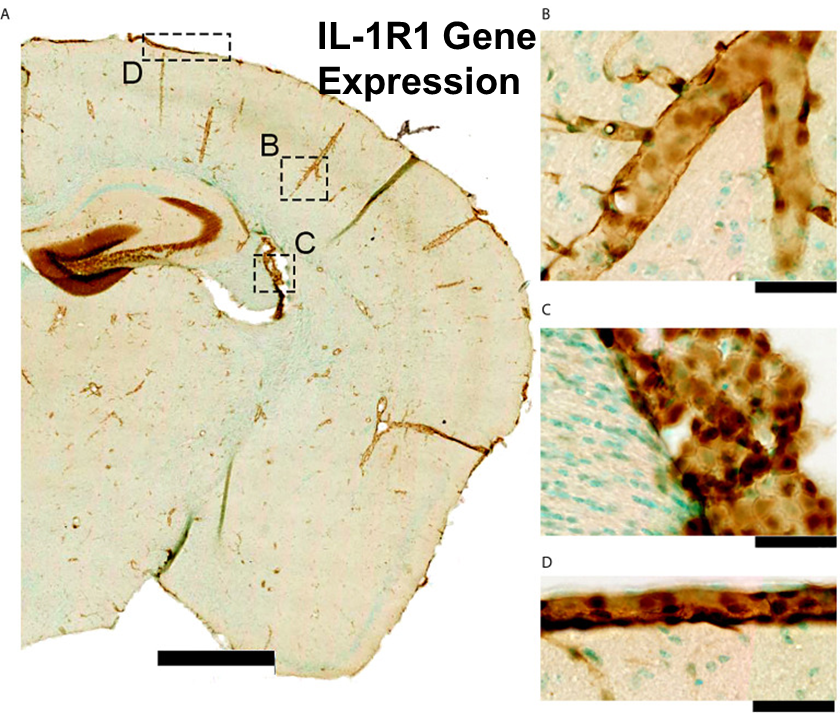
This R01 project is a collaborative effort with Dr. Adam Bachstetter in the UK Spinal Cord and Brain Injury Research Center. This work was funded by the NINDS in July 2022 and examines the role of neuronal IL-1 receptor 1 (IL-1R1) signaling in functional recovery following a closed head injury.
Mild head injuries are by far the most common form of traumatic brain injury (TBI) that can eventually lead to a variety of chronic neurodegenerative conditions including AD and CTE. Lingering neuroinflammation is widely thought to be a key mechanism that links head injury to later neurodegeneration and dementia.
IL-1 is a master regulator of inflammatory signaling inside and outside the CNS. Rheumatoid arthritis and other peripheral inflammatory disorders are successfully treated with IL-1 inhibitors. However, the same success has not been realized for inflammation-related disorders of the CNS (like TBI, AD, and CTE), where IL-1 interacts with canonical and non-canonical receptor pathways across a variety of different cell types including neurons, glia, and vascular endothelial cells.
In this project, we hypothesize that IL-1-IL-1R1 interactions in brain can be primarily neuroprotective, or neuroinflammatory, depending on the cell types involved. To test this hypothesis we use novel mouse models that selectively express or knock-out IL-1R1 and other IL-1R signaling constituents in neurons. Transcriptomic, electrophysiological, and cognitive measures are used to assess functional outcome in transgenic mice following a mild closed head injury.
Key Publications
Coming soon!
